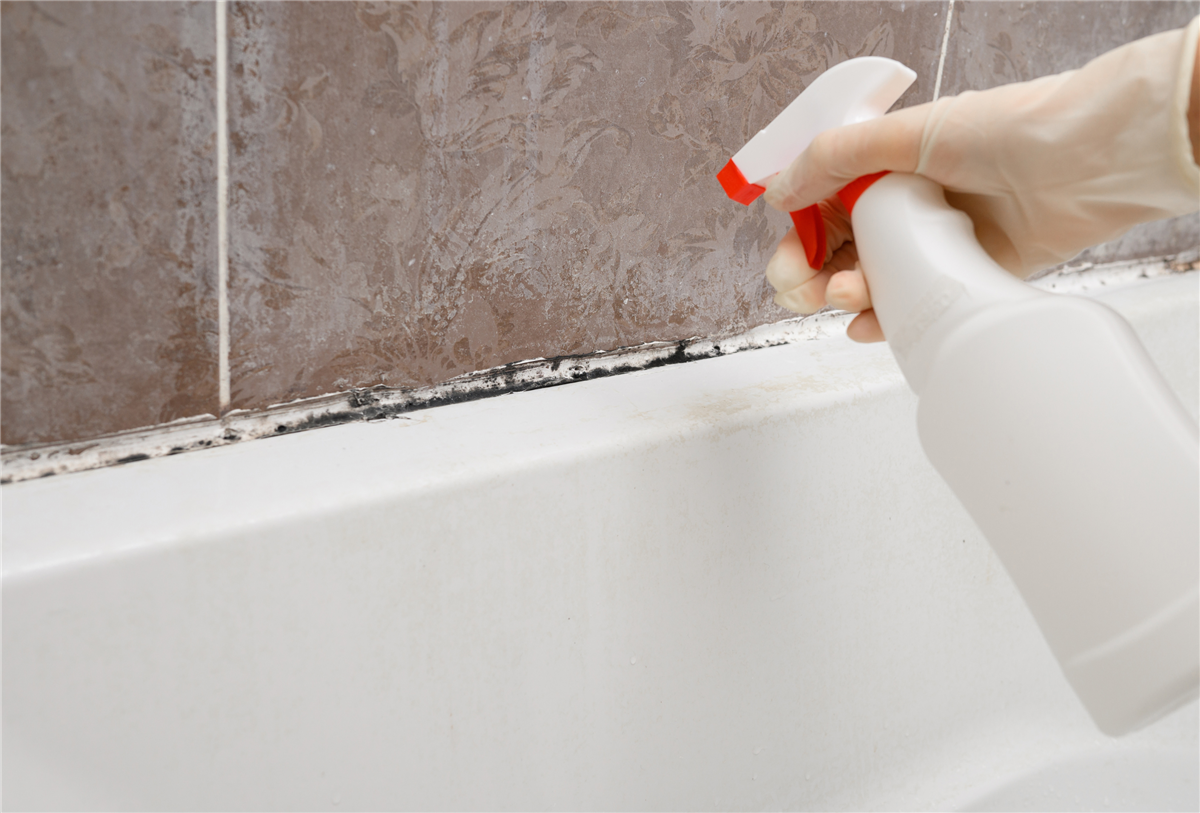
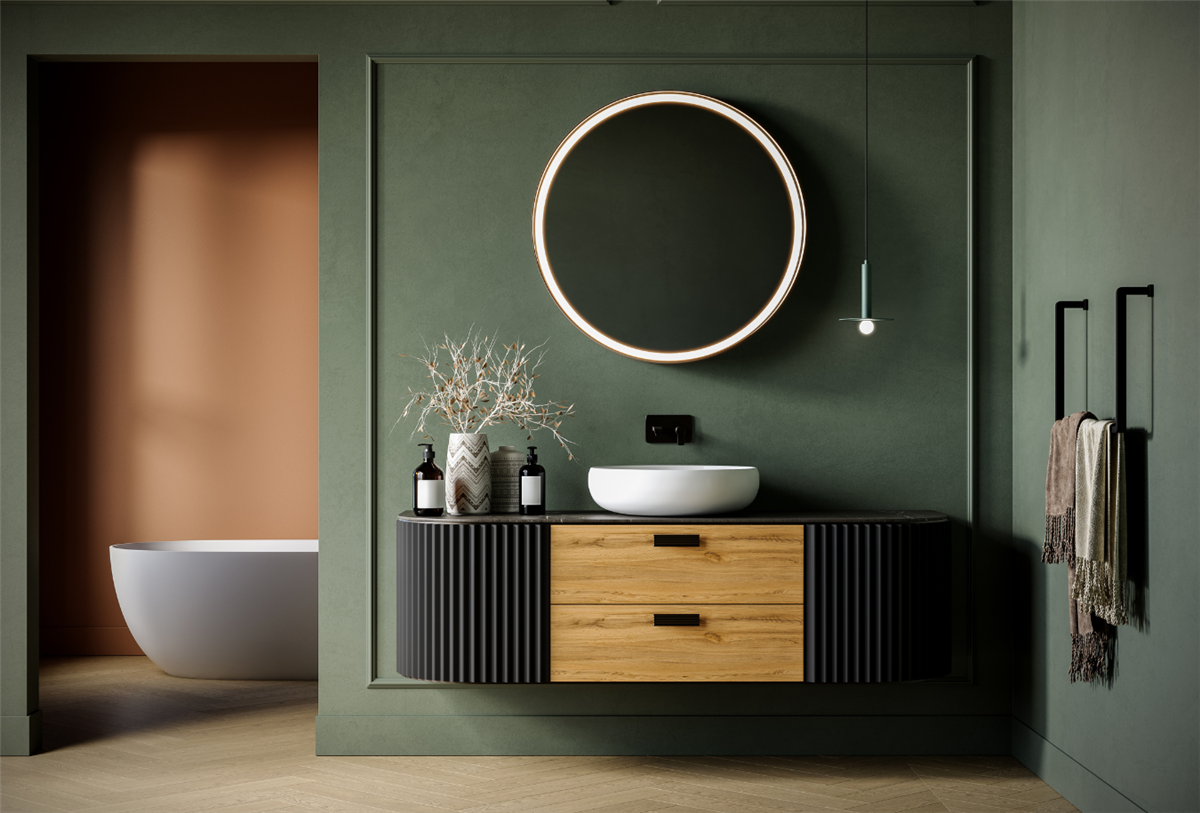
You know your bathroom needs work. The grout is discolored, the caulk is peeling, or maybe you’re just tired of looking at the same dated tub you’ve had for 20 years. But the moment you start researching options, you hit a wall of choices: tile, natural stone, fiberglass inserts, reglazing, liners, acrylic or PVC systems. Each one promises something different, and the price ranges are all over the map.
So how do you actually decide? We have served homeowners since 1961 and have seen how each of these materials holds up over time. To help you make the best decision for your home, budget, and lifestyle, we created a guide that honestly breaks down the pros and cons of every option.
What About Reglazing? (The Cheapest Option — With a Catch)
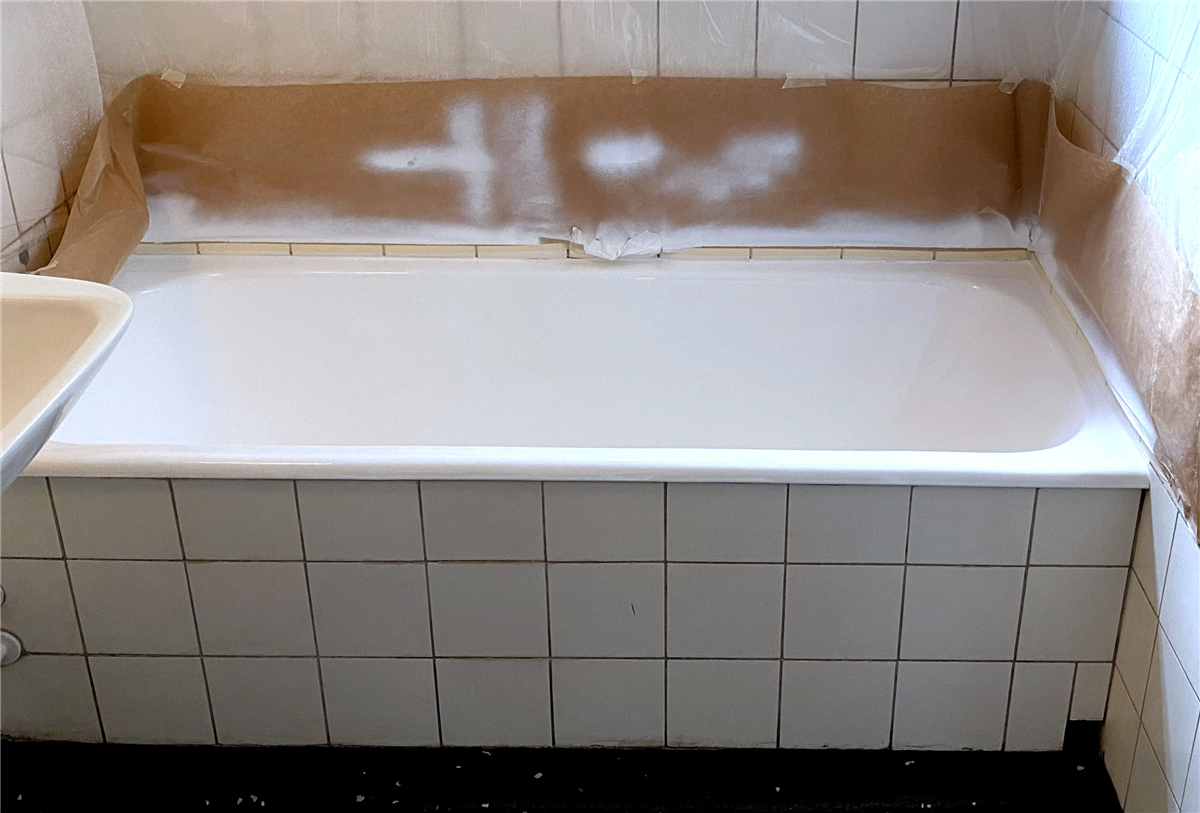
Reglazing — also called refinishing — is the process of spraying a new coating over your existing tub or shower surface. It’s the lowest-cost option, which makes it appealing at first glance.
What you should know:
Reglazing is done quickly and inexpensively, but it comes with significant trade-offs. The coating is applied using caustic chemicals that produce toxic odors, which is a health concern during and after application. The CDC has published guidance on the risks of chemical exposure from bathtub refinishing.
More importantly, the coating has a short life expectancy. It’s prone to peeling, staining, and yellowing — often within just a few years. Once the gelcoat breaks down, the surface becomes porous, absorbs bacteria, and is difficult to clean. And after a 3–7 day curing period, your bathroom may still not look or feel like new.
Best for:
Landlords or sellers looking to update a property before listing it, rather than as a long-term solution for a primary residence.
What About Tub and Shower Liners ? (The “Cover It Up” Approach)
Tub and shower liners are pre-formed shells which are installed by gluing them over the existing tub or shower walls. The idea is that you’re covering the old surface without removing it.
The problem:
Water gets under the liner. It always does. Once moisture collects between the original tub and the cover, it becomes stagnant — creating a hidden environment for mold and bacteria growth that you can’t see or clean. Installing the liners requires significant amounts of toxic glue and caulking and over time the adhesive fails, causing the walls to bow.
There’s also a practical limitation: liners can only be installed over tile. They’re not an option if your current bathroom has a fiberglass tub or shower. And because you’re covering existing problems instead of fixing them, you’re essentially paying to hide underlying damage that will continue to worsen over time.
Best for:
Honestly, we don’t recommend liners. The long-term risks outweigh the short-term savings.
What About Fiberglass Inserts? (Looks Good — But Not for Long)
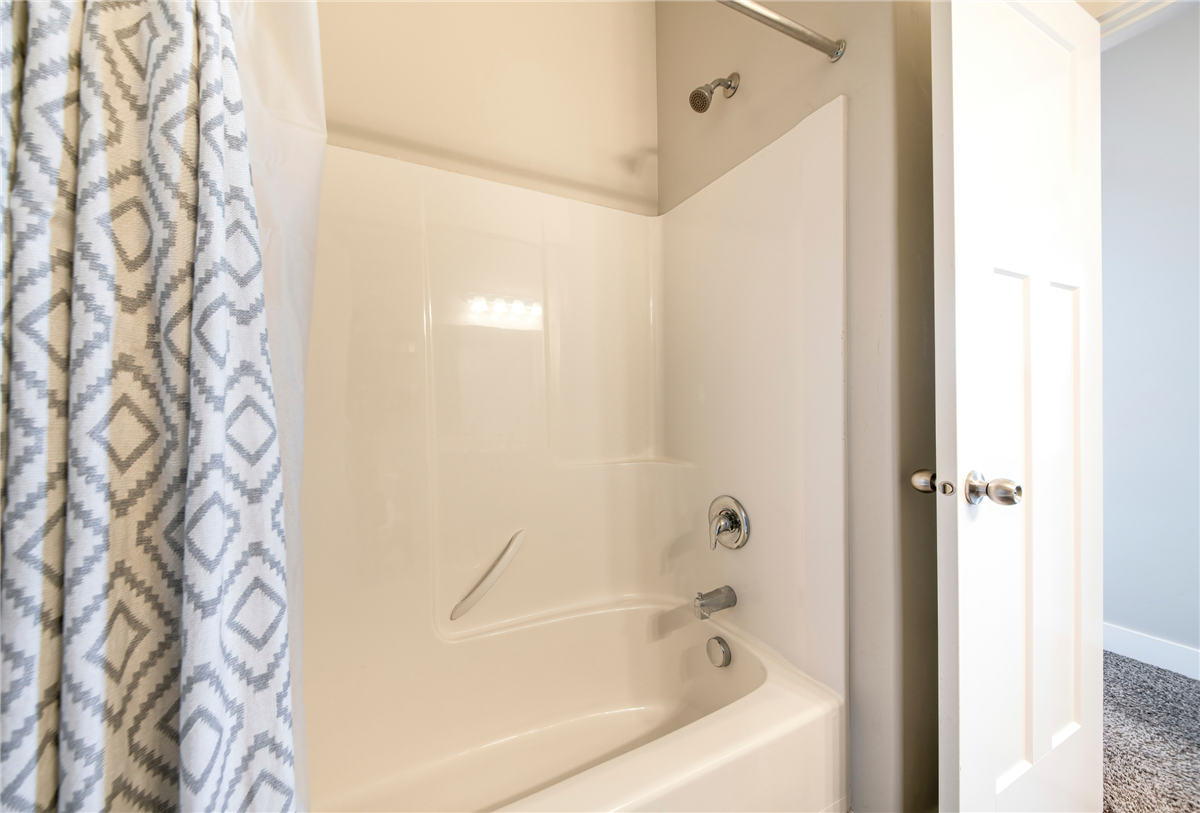
Fiberglass shower and tub inserts are mass-produced, one-size-fits-most units. They’re available at most big-box stores and can be installed in about a day.
The downsides:
Fiberglass has a short lifespan of roughly 3–5 years. The surface is a gelcoat finish that breaks down over time, causing staining and discoloration. The material is porous, which means it absorbs bacteria and becomes increasingly difficult to keep clean.
Most fiberglass inserts are 4-piece interlocking systems. These interlocking seams are prone to leaking — and since fiberglass is not inherently waterproof, water can get behind the panels and cause hidden damage to your walls. Fiberglass also doesn’t support mounted grab bars, so it’s not a safe option for homeowners who need accessibility features. And because they come in standard sizes, there’s no custom fit for non-standard bathrooms.
Best for:
A very tight budget where appearance matters more than longevity. Be prepared to replace it again within a few years.
What About Tile? (Beautiful, But High-Maintenance and Costly)
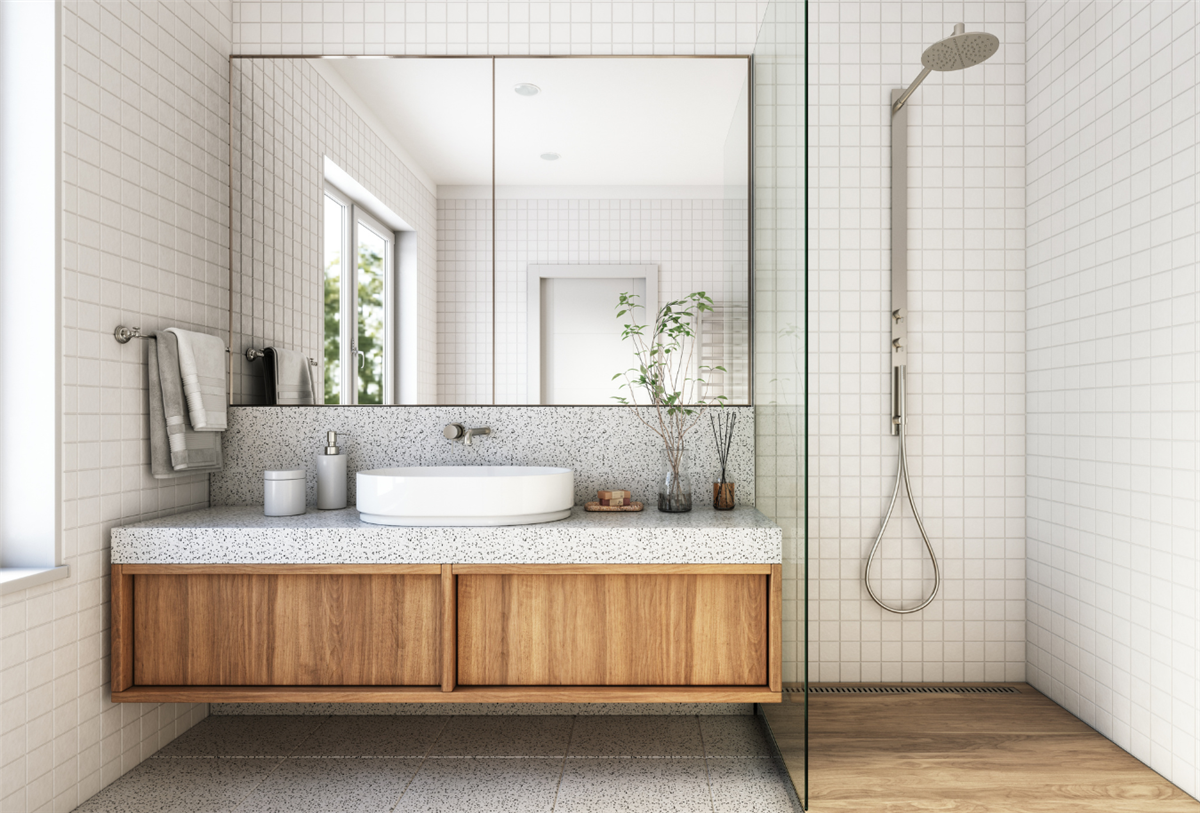
Traditional tile is one of the most popular choices for bathroom remodels, and it’s easy to see why: the design options are nearly unlimited, and a freshly tiled shower looks stunning. But tile comes with real downsides that many homeowners don’t consider until after the project is done.
The maintenance problem:
Grout is porous. It absorbs water, which causes mold and mildew to grow in the seams. You’ll need to seal your grout every six months to keep it looking clean, and even then, it discolors over time. The photos we show homeowners during consultations tell the story — tile showers that looked beautiful on day one, but two years later the grout is stained, cracked, or growing mold behind the surface.
Tile is also not ADA-friendly. Grab bars can’t be securely mounted to tile walls, which makes it a poor choice for aging-in-place or accessibility remodels. Installation takes multiple days to weeks, and the labor-intensive process drives up the total cost significantly. There’s also typically no warranty on tile work, so if something fails, you’re paying for the fix out of pocket.
Best for:
Homeowners who prioritize design variety and don’t mind the ongoing maintenance commitment.
What About Natural Stone or Marble? (The Premium Choice — With Premium Problems)
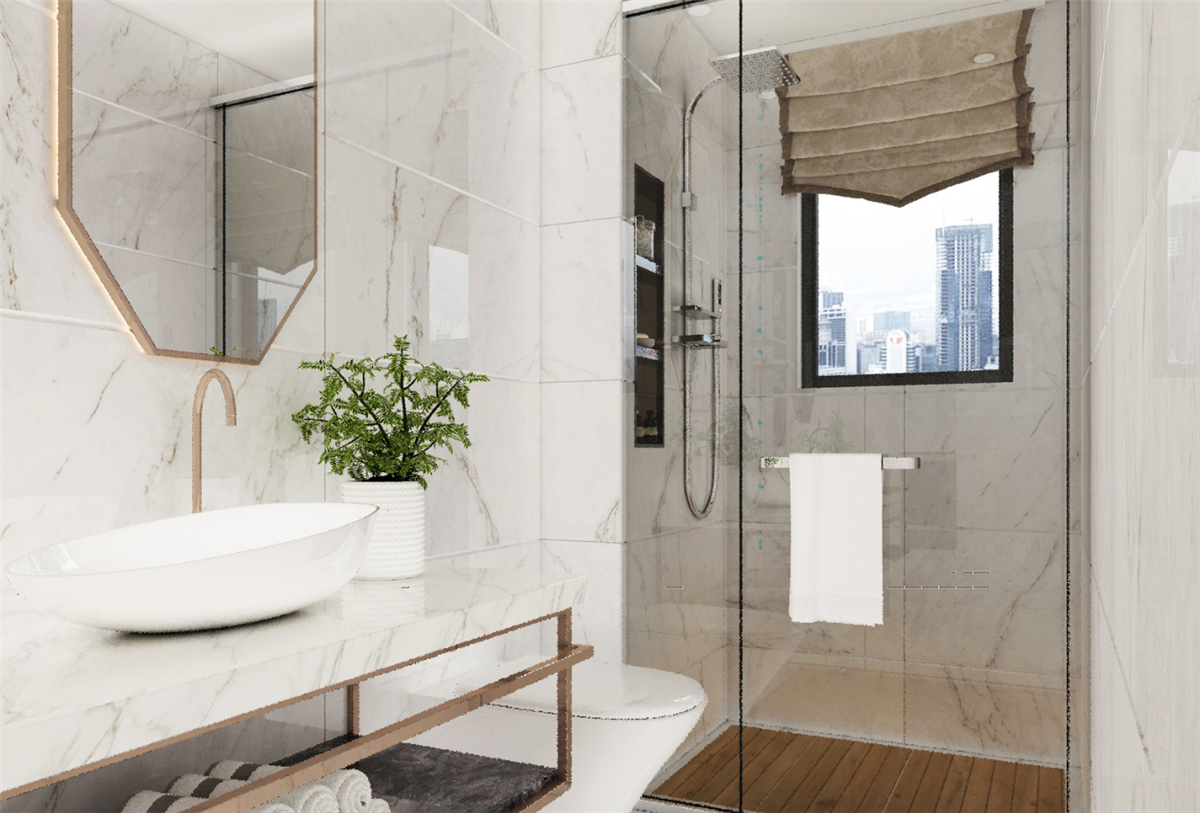
Natural stone and marble lead the market in both aesthetics and cost. There’s nothing quite like the look of real marble in a bathroom. But this luxury choice comes with significant practical limitations.
The reality:
Stone is incredibly heavy, often requiring reinforced walls and bases to support the weight. The surface is porous, which means it stains easily and needs regular sealing to prevent discoloration. Natural stone develops fissures — hairline cracks that form naturally in the material — which can collect moisture and bacteria over time.
Like tile, natural stone doesn’t support mounted grab bars, so it’s not an option for accessible bathrooms. And the price reflects the premium: natural stone and marble bathroom remodels are by far the most expensive option on the market.
Best for:
High-end, design-driven renovations where budget and maintenance are not primary concerns.
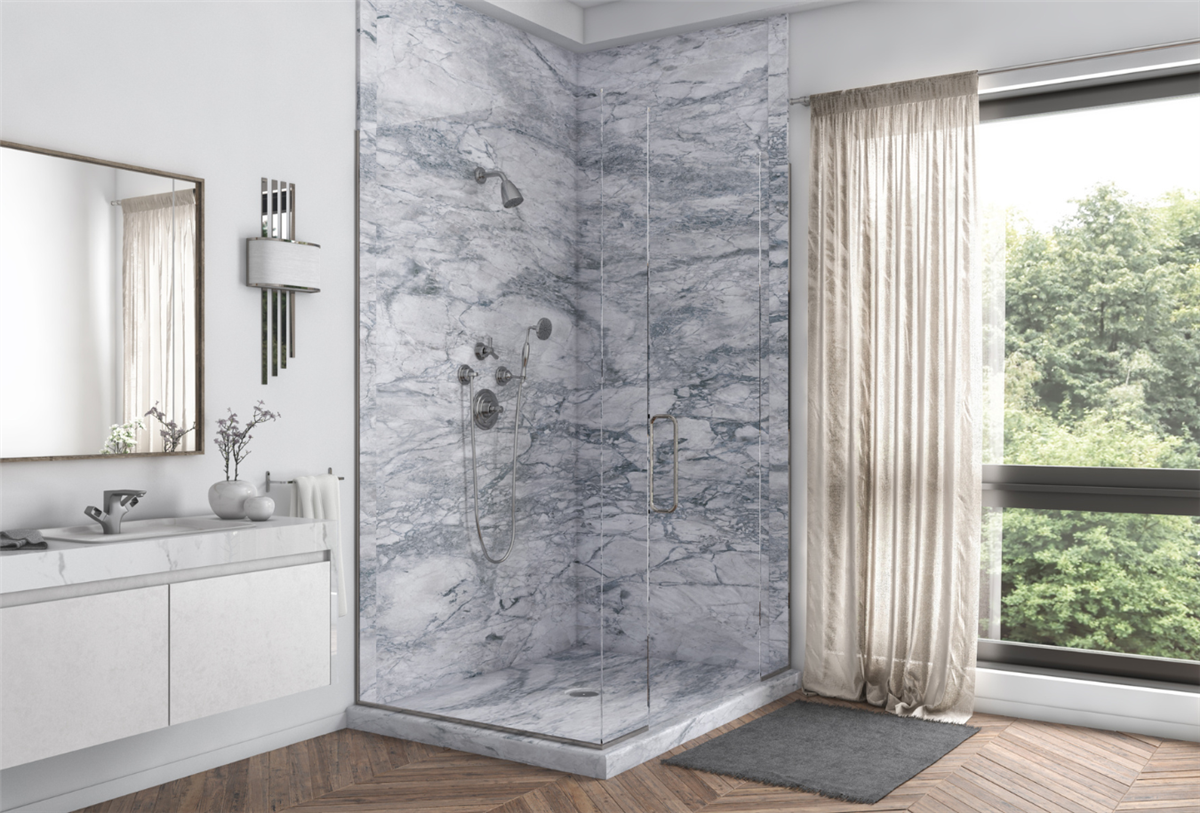
If you love the look of natural stone but want to avoid maintenance headaches, there is a smart alternative. ProEdge Remodeling is an authorized dealer for Reveal by KOHLER LuxStone®, serving the Upstate New York area. LuxStone walls are crafted from crushed stone, providing the authentic look and feel of natural stone with a completely non-porous, grout-free, and stain-resistant surface. You'll get lasting beauty without needing to seal it or worry about fissures and weight. You can choose from a wide range of colors, patterns, and textures, and customize your space with high-quality KOHLER fixtures and built-in shelving. Your project can be professionally installed in as little as one day and is backed by a Lifetime Limited Warranty.
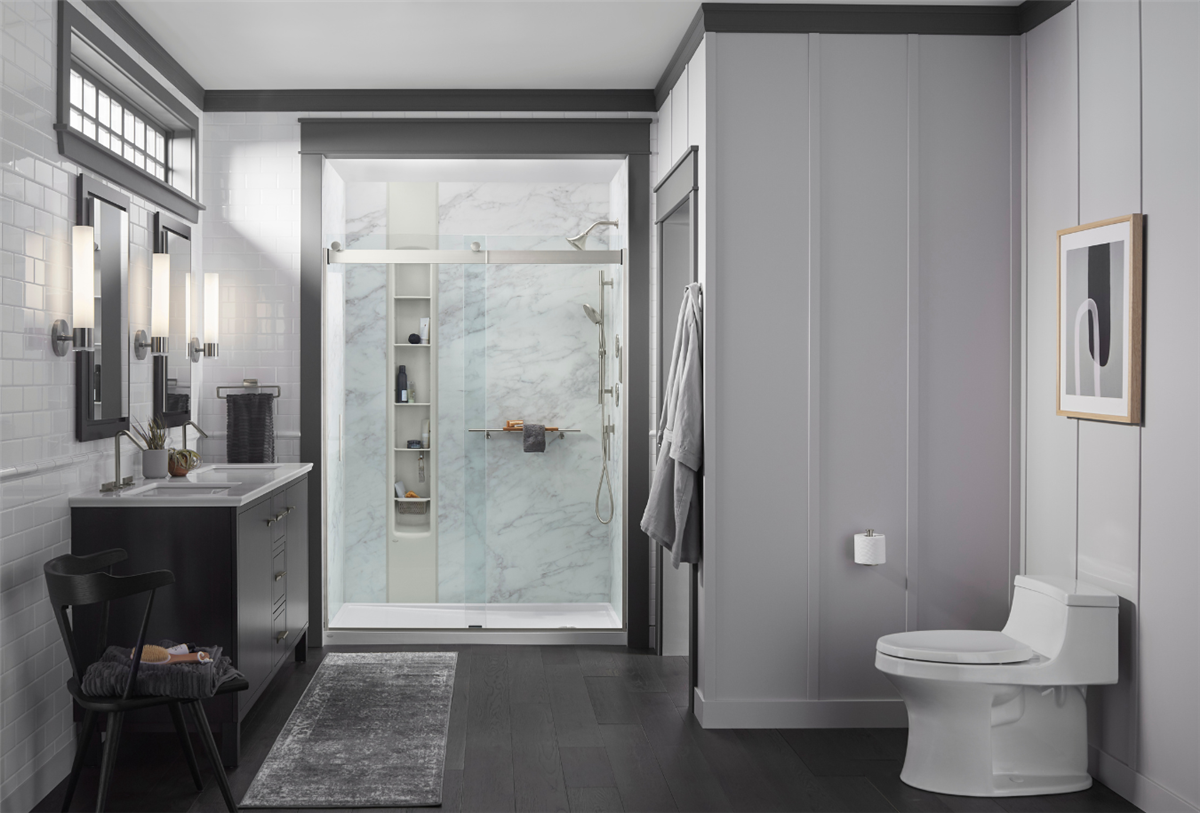
Reveal by KOHLER LuxStone® Walk-In-Shower
What About Composite PVC System? (What ProEdge Bath Systems Installs — and Why)
Why We Don't Use Acrylic?
This wasn't a marketing decision. It was a quality decision.
After 61 years of serving homeowners across New England, New York, Maryland, and Washington DC, we know exactly what holds up in real homes — and what doesn't. That's why ProEdge Bath Systems is built entirely around composite PVC wall and base systems, manufactured right here in the USA. We looked at acrylic. We rejected it. Here's why.
What most remodeling companies install — and don't tell you about
Acrylic is the default material across the remodeling industry because it's cheap to produce, easy to source, and simple to market. What companies using acrylic don't lead with: it's largely imported, it's thin and flimsy to the touch, it scratches easily, and the surface pattern is a low-resolution photographic print that looks artificial the moment you get close to it. The sealant is outdated. The finish dulls with age. And once it's scratched — and it will scratch — there's no recovering it.
We don't install acrylic. We never have. Not because we couldn't — because we won't.
What ProEdge Bath Systems installs instead
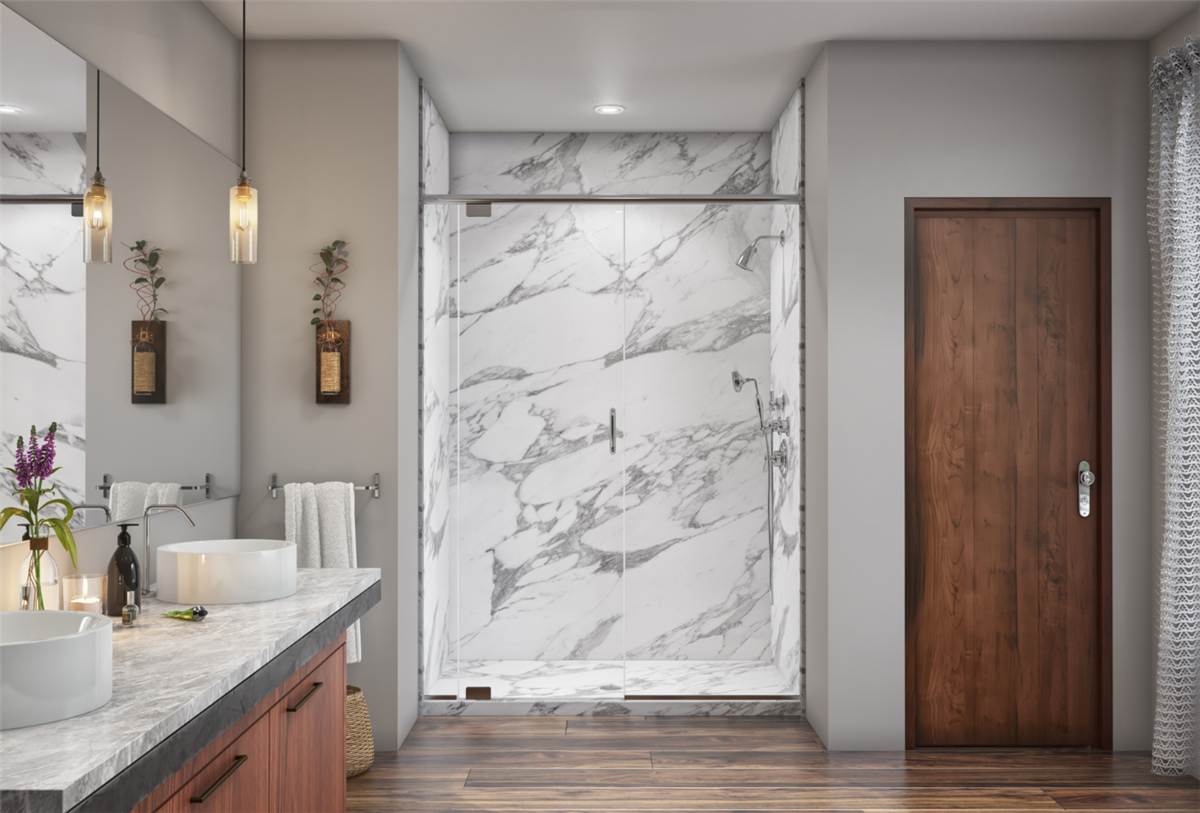
Our wall panels are engineered from composite PVC with a NanoProtect sealant and real stone slab imagery digitally stitched together at over 800 megapixels. That's not a marketing number — it's the reason our panels look like natural stone when you're standing two inches away from them, not just in a showroom photo. The surface is completely non-porous. No grout lines. No mold. No mildew. No scrubbing. Wipe it down and it looks the day it was installed.
Our bases are in a different category entirely
The industry standard base is foam-backed acrylic. If you've stood in one, you already know the problem — that slight flex underfoot, the hollow sound when you step, the creaking. Those bases crack over time, pull away from their core, and their smooth surfaces are a genuine slip hazard.
Every ProEdge base is 100% custom. We measure your exact space, place the drain precisely where it needs to be, and build around a solid PVC core — not Styrofoam. It's rigid. Silent. It feels like standing on solid ground, because structurally, it is. Every base is finished with our NanoGrip non-slip coating — a texture engineered to prevent slipping, not just reduce it.
What this means for you:
- Looks like real stone — 800+ megapixel digital imagery, non-porous surface, realistic depth and variation that acrylic simply cannot replicate
- No mold, no mildew, no grout — ever. There's nothing porous for moisture or bacteria to penetrate
- Four-layer waterproof system — complete moisture protection behind your walls, not just on the surface
- Custom-fit to your exact space — every wall panel and base measured and built for your bathroom specifically; no gaps, no shimming, no off-the-shelf compromises
- Solid, safe base — PVC core, NanoGrip non-slip coating, drain positioned where your space actually requires it
- Accessibility-ready — PVC construction fully supports mounted grab bars, built-in bench seating, and barrier-free or low-threshold entries
- Fast installation: Most remodels are completed in as little as one day
- Lifetime warranty — materials and workmanship, backed by a company that's been in business for 61 years and will be here to honor it.
- Made in the USA: Our products are manufactured domestically, which means higher quality control and shorter lead times
ProEdge Bath Systems give you the best combination of durability, aesthetics, low maintenance, and value — and it’s the only option on this list that checks every box for both style and accessibility.
Best for:
Homeowners who want the look of natural stone, zero maintenance, a bathroom that's safe, solid, and built to last — and who are done settling for whatever the cheapest contractor installs by default.
Frequently Asked Questions
Q: Which bathroom remodel material lasts the longest?
A: ProEdge Remodeling offers the best combination of durability and warranty protection. Unlike fiberglass (3–5 year lifespan), reglazing (prone to peeling within a few years), or grouted tile (which deteriorates without constant maintenance), PVC wall and base systems are non-porous, stain-resistant, and backed by a lifetime warranty on materials and workmanship.
Q: Is tile or PVC better for a shower?
A: It depends on your priorities. Tile offers unlimited design options but requires ongoing grout maintenance, sealing every six months, and multi-day installation with no warranty. PVC panels look like real stone, are completely waterproof with no grout to maintain, install in as little as one day, and come with a lifetime warranty. For most homeowners, PVC wall and base systems offers a better long-term value.
Q: Can I convert my bathtub to a walk-in shower?
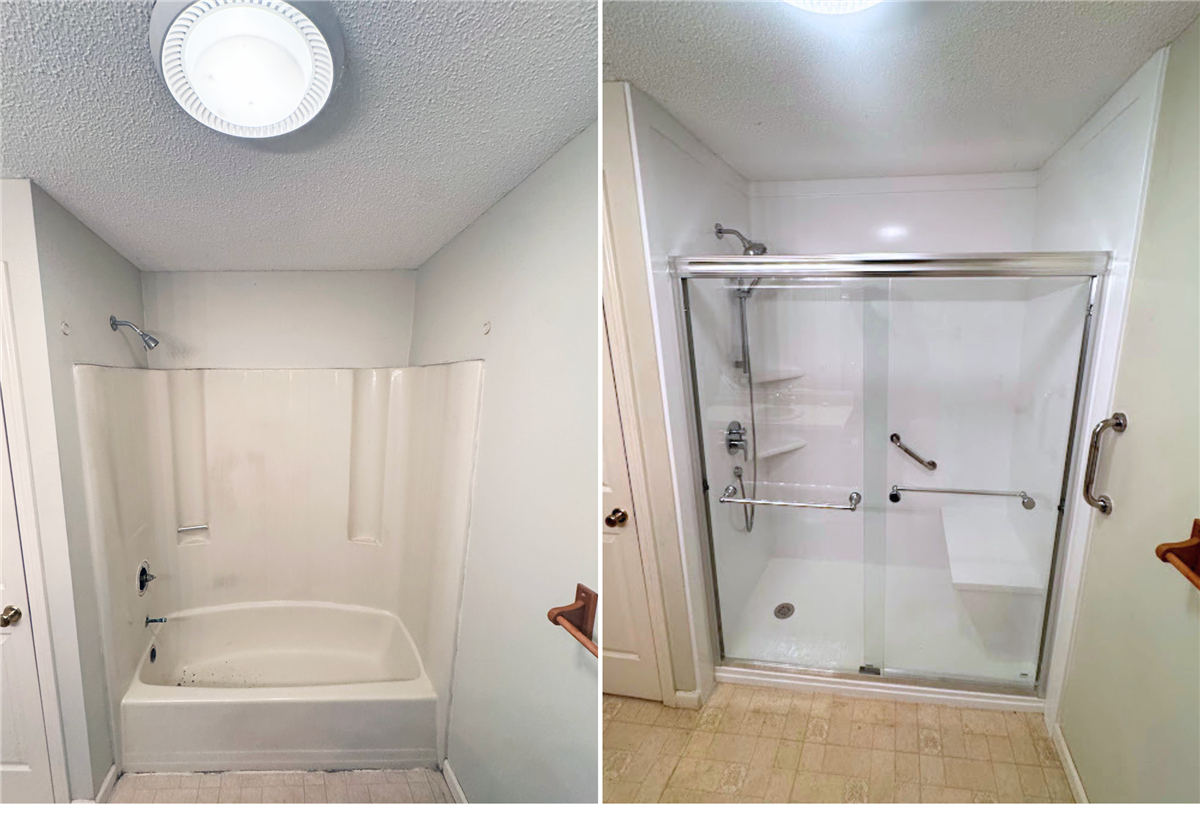
A: Yes. Tub-to-shower conversions are one of the most popular bathroom remodeling projects. ProEdge Remodeling removes your existing tub and replaces it with a custom-fit walk-in shower system, including wall panels, fixtures, and optional accessibility features like grab bars, built-in seating, and low-threshold entries. Most conversions are completed in one day.
Q: Is reglazing my bathtub a good idea?
A: Reglazing is a low-cost option, but it’s a temporary fix. The coating involves caustic chemicals with toxic fumes, has a 3–7 day curing period, and tends to peel, stain, and yellow within a few years. If you plan to stay in your home, a full replacement with a durable material like PVC wall systems will last significantly longer and require no recoating.
Q: Are bathtub liners a good alternative to a full remodel?
A: We don’t recommend liners. They’re glued over your existing tub or shower, and water inevitably gets underneath the liner, creating hidden mold and bacteria between the old surface and the new cover. The adhesive fails over time, causing bowing walls. Liners also only work over tile — they’re not compatible with fiberglass. A full replacement eliminates the old surface entirely and gives you a clean, waterproof system.
Q: How long does a bathroom remodel take with ProEdge Remodeling?
A: Most ProEdge Remodeling bathroom remodels are completed in as little as one day. That includes removal of your old tub or shower, installation of new wall panels with our four-layer waterproof system, and fitting of all fixtures and accessories. More complex projects involving plumbing changes may take two to three days.
Ready to See Your Options in Person?
The best way to compare bathroom remodeling materials, fixtures and accessories is to see and touch them. During your free, no-obligation in-home consultation, a ProEdge Remodeling specialist will bring samples, take measurements, and walk you through exactly what your remodel will look like — with a clear estimate and financing options.
Subscribe to ProEdge Remodeling's Blog